What Industries Are Primed for AI-Native Disruption

AI disruption will not arrive evenly.
Every industry will use AI. Every function will experiment with copilots, automation, agents, and generative interfaces. Every executive team will ask where productivity can improve.
But only some industries are truly primed for AI-native disruption.
The difference matters.
AI adoption means adding AI tools to existing work.
AI-native disruption means the operating model changes: cost structures shift, decision cycles compress, labor models are redesigned, customer experiences become more adaptive, and competitive advantage moves toward organizations that can orchestrate intelligence at scale.
That is the more important question for leaders:
Where does AI become an operating system, not just a feature?
The Criteria for AI-Native Disruption
Not every industry is equally exposed to AI-native transformation.
The most vulnerable and opportunity-rich industries tend to share several characteristics.
First, they are knowledge-heavy. A large share of work involves language, documents, decisions, analysis, coordination, customer interaction, research, or compliance.
Second, they have fragmented workflows. Work moves across inboxes, spreadsheets, legacy systems, calls, PDFs, portals, approvals, and human handoffs.
Third, they depend on expensive expertise. Lawyers, clinicians, engineers, analysts, advisors, underwriters, planners, and specialists are bottlenecks.
Fourth, they have repeatable decisions. The work is not identical every time, but it follows patterns that can be augmented, routed, recommended, or partially automated.
Fifth, they have rich data and context. AI-native systems need records, histories, policies, transactions, documents, logs, images, signals, and institutional knowledge.
Sixth, they have measurable outcomes. Cycle time, cost per case, conversion, resolution rate, risk reduction, revenue per employee, claim leakage, patient throughput, student mastery, or defect rate can be tracked.
Seventh, they have pressure to change. Margin compression, labor shortages, regulatory complexity, customer expectations, digital competition, or infrastructure constraints make the status quo fragile.
The industries most primed for AI-native disruption sit at the intersection of these forces.
They do not just have AI use cases.
They have operating models waiting to be rebuilt.
1. Customer Operations and Contact Centers
Customer operations may be the most immediate AI-native disruption zone.
The reason is simple: the work is language-heavy, high-volume, measurable, and expensive. Contact centers handle questions, complaints, troubleshooting, routing, escalation, refunds, renewals, documentation, and customer sentiment every day.
Traditional customer operations are built around human queues.
Customers wait. Agents search knowledge bases. Supervisors handle escalations. Quality teams review samples. Managers inspect dashboards after the fact.
AI-native customer operations look different.
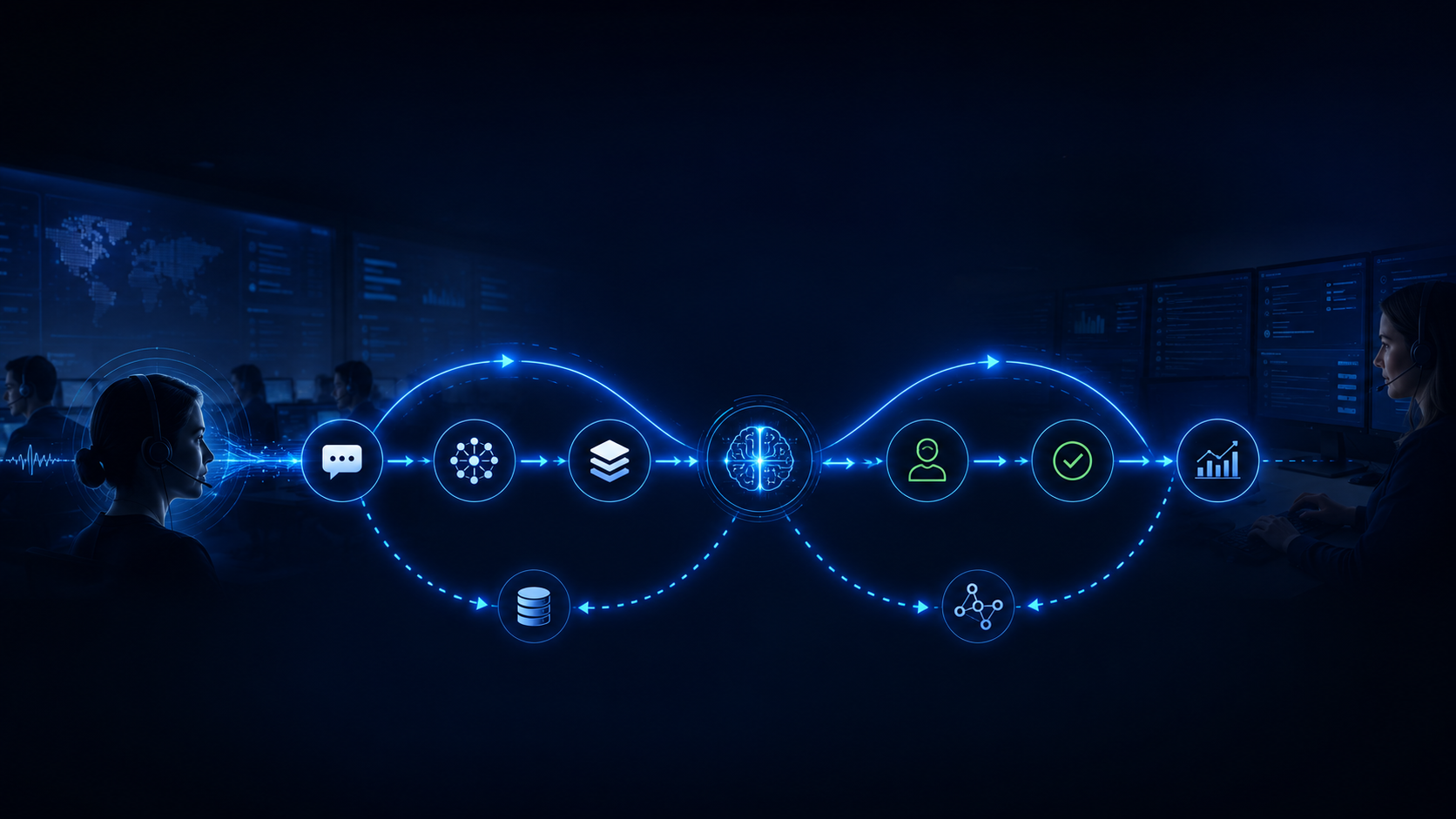
AI agents can classify intent, retrieve context, summarize history, recommend answers, draft responses, update records, route cases, detect sentiment, escalate risk, and learn from outcomes. Human agents become supervisors, exception handlers, empathy specialists, and relationship managers.
The cost structure changes because routine interactions can be handled with much less human labor. Decision speed changes because routing and context assembly happen instantly. Customer experience changes because support becomes more proactive and personalized.
The disruptive move is not the chatbot.
The disruptive move is the AI-native service loop: sense the issue, understand the customer, recommend or resolve, update the system, learn from the outcome, and prevent recurrence.
Companies that build this loop well will make traditional ticket-based support feel slow and expensive.
2. Software Development and IT Operations
Software is already one of AI’s fastest-moving disruption zones.

Coding assistants were the first wave. The next wave is agentic software work: issue triage, code generation, test creation, dependency updates, migration, documentation, incident analysis, pull request review, security scanning, and deployment support.
Software development is primed because it has structured artifacts, measurable outputs, repeatable workflows, and high-cost talent. Code repositories, tickets, logs, architecture diagrams, runbooks, tests, and deployment pipelines create rich context for AI systems.
AI-native software organizations will not simply give every developer a copilot.
They will redesign the software delivery lifecycle around human-agent teams.
Agents will handle more routine implementation, test generation, refactoring, documentation, environment setup, and incident investigation. Engineers will spend more time on architecture, product judgment, design tradeoffs, code review, system reliability, and high-leverage problem solving.
IT operations will also change. AI agents can monitor logs, correlate alerts, summarize incidents, propose remediations, open tickets, trigger runbooks, and escalate when confidence is low.
The disruption is structural: fewer bottlenecks between idea and implementation, faster incident response, more automated maintenance, and smaller teams capable of operating larger systems.
The companies that win will not be the ones that merely generate more code.
They will be the ones that govern AI-generated work through testing, security, observability, and human review.
3. Financial Services and Insurance
Financial services are highly exposed to AI-native disruption because they run on information, risk, compliance, customer interaction, and decision workflows.
Banking, wealth management, lending, payments, compliance, audit, insurance, and capital markets all involve large volumes of documents, transactions, rules, exceptions, and judgments.
AI-native financial services can change several operating layers at once:
- Customer onboarding
- Know-your-customer workflows
- Fraud detection
- Credit analysis
- Underwriting
- Claims handling
- Compliance monitoring
- Advisor support
- Portfolio analysis
- Audit and controls
- Customer service
Insurance may be especially primed.
Claims and underwriting are document-heavy, rule-heavy, context-heavy, and measurable. AI agents can ingest evidence, summarize claims, compare against policy language, detect anomalies, recommend next actions, and route exceptions to human adjusters.
The opportunity is not only cost reduction.
It is faster risk decisions.
A bank that can evaluate credit, fraud, compliance, and customer context faster has an advantage. An insurer that can settle simple claims quickly while escalating complex claims intelligently has an advantage. A wealth platform that can provide more personalized advice with governed AI support has an advantage.
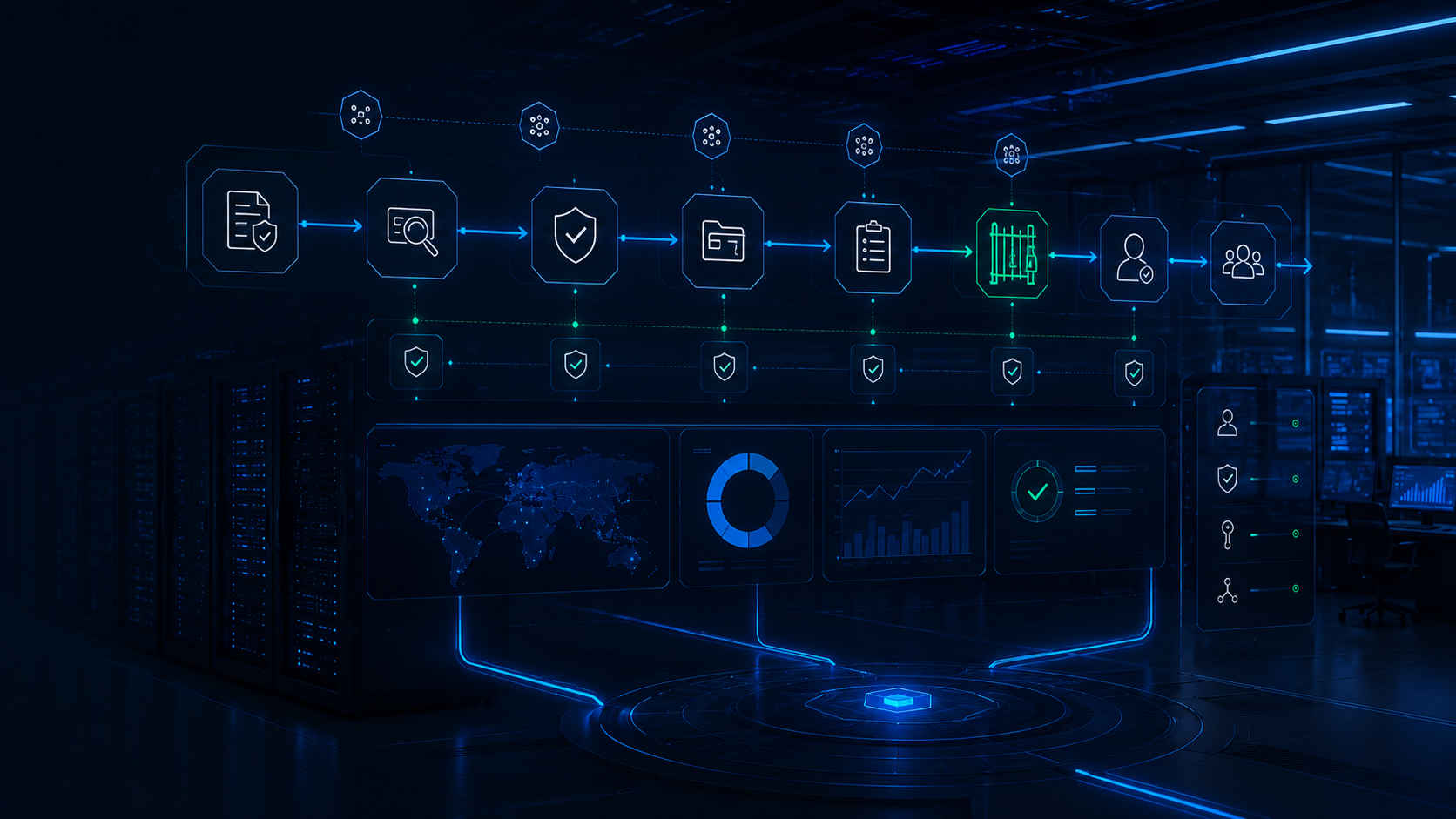
But financial services also show why control planes matter. AI-native disruption in regulated industries requires identity, auditability, explainability, model governance, human approval, data lineage, and policy enforcement.
The winners will be fast and governed.
4. Healthcare Administration and Care Navigation
Healthcare is often discussed as an AI opportunity, but the most immediate disruption may be administrative and navigation work rather than autonomous clinical decision-making.

Healthcare is filled with fragmented workflows: scheduling, prior authorization, documentation, billing, coding, referrals, care coordination, patient messaging, benefits verification, discharge planning, and compliance reporting.
These workflows are expensive, slow, frustrating, and heavily document-based.
AI-native healthcare administration can reduce friction across the system.
Agents can summarize records, draft prior authorization requests, route referrals, prepare visit notes, answer patient questions, reconcile benefits, identify missing documentation, and coordinate follow-up tasks.
Care navigation is another major opportunity. Patients struggle to understand where to go, what to do next, what their plan means, which provider to contact, and how to manage chronic conditions. AI systems can provide guided support while escalating medical judgment to clinicians.
The operating model shift is from reactive paperwork to proactive coordination.
Clinicians remain central. Human oversight remains critical. Privacy and safety requirements are high.
But the administrative burden in healthcare is so large that even partial AI-native transformation could change cost structures and patient experience.
The most disruptive healthcare AI may not look like a robot doctor.
It may look like a health system that finally coordinates itself.
5. Legal and Professional Services
Legal, consulting, accounting, tax, audit, and advisory services are primed because their work is knowledge-intensive, document-heavy, and built around expensive expert labor.
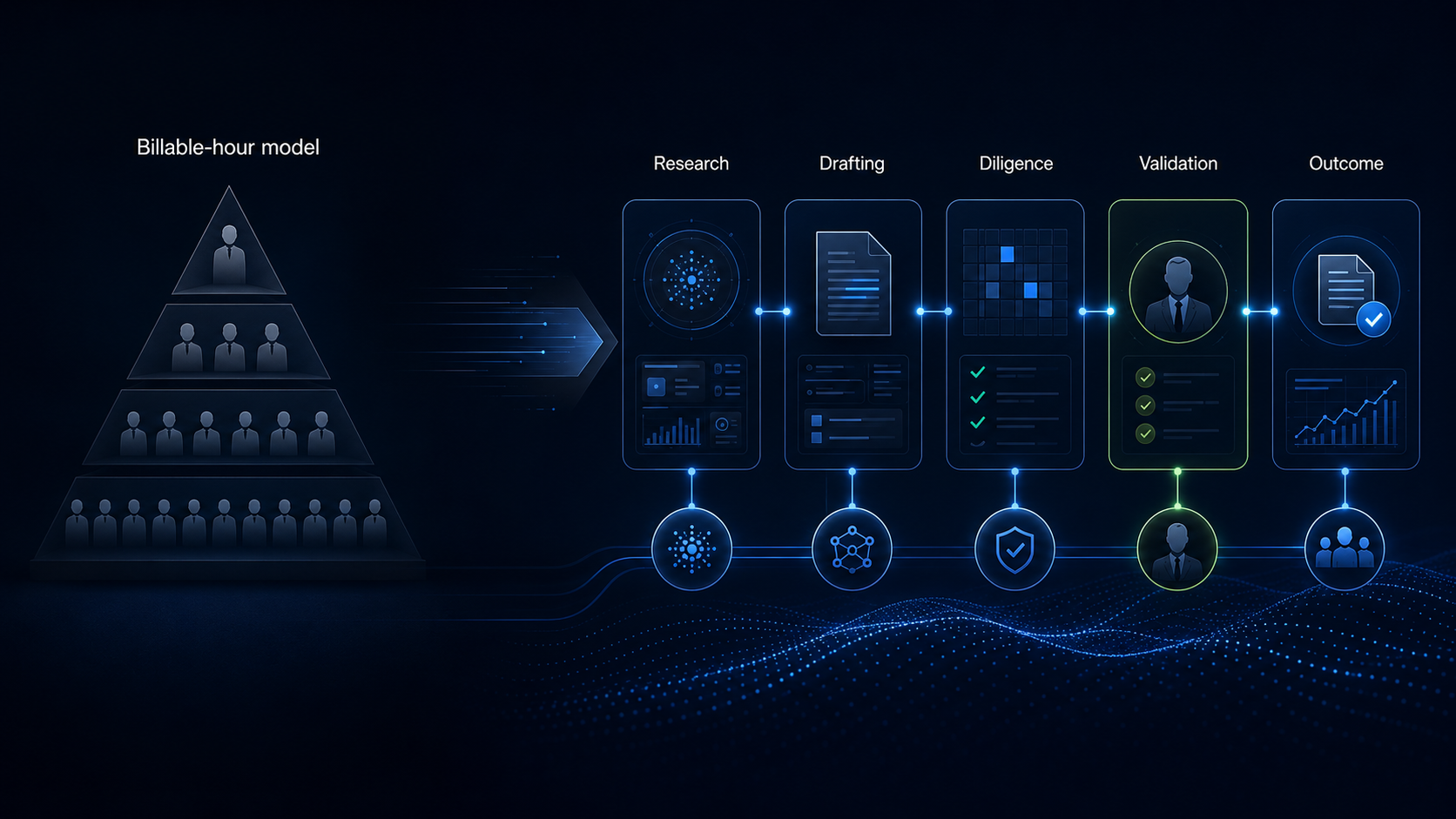
Traditional professional services firms sell human expertise organized into billable hours, leverage models, review cycles, and partner oversight.
AI-native professional services challenge that model.
AI agents can review documents, extract clauses, compare contracts, summarize research, draft memos, prepare diligence reports, analyze financial statements, generate first-pass recommendations, and monitor regulatory changes.
This does not eliminate expert judgment.
It changes where expert judgment is applied.
Junior research and drafting work may become more automated. Senior professionals may focus more on framing problems, validating outputs, advising clients, negotiating tradeoffs, and managing risk.
The disruption is not simply faster documents.
It is a new service delivery model.
Clients may expect faster turnaround, lower cost, more transparency, and continuous advisory support instead of episodic projects. Smaller firms may gain leverage previously available only to large firms. Large firms may need to justify premium pricing with deeper judgment, proprietary data, and trusted governance.
Professional services firms that cling to hours as the core unit of value may be disrupted by firms that sell outcomes, speed, and intelligence-enabled expertise.
6. Education and Workforce Learning
Education is primed for AI-native disruption because the traditional model struggles with personalization at scale.
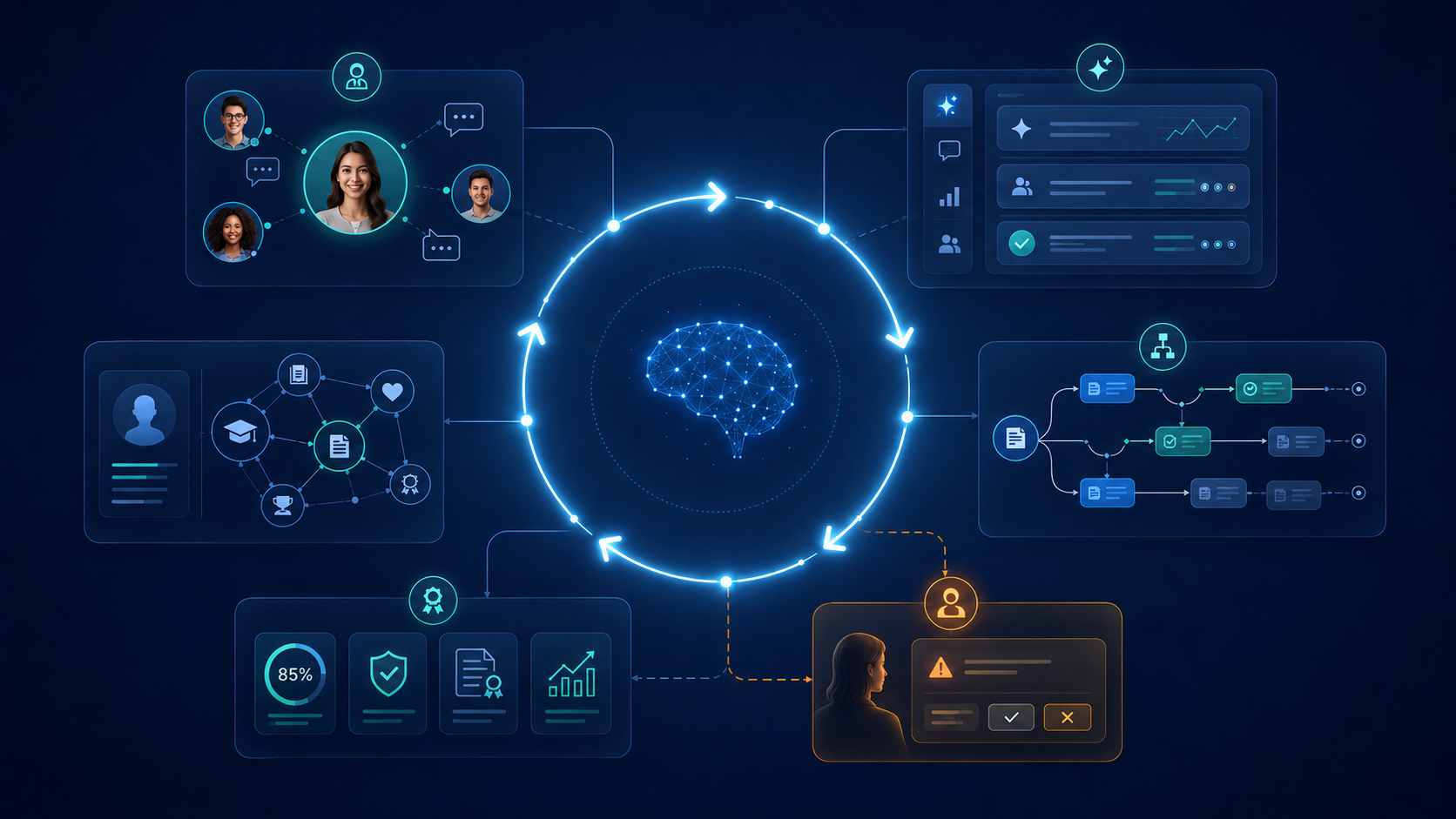
K-12 schools, universities, corporate training programs, and workforce reskilling systems all face the same problem: learners have different goals, gaps, speeds, contexts, and support needs.
AI-native education changes the learning loop.
Instead of one-size-fits-all instruction followed by periodic assessment, students and workers can receive continuous feedback, adaptive practice, targeted explanation, personalized pathways, and learning memory that follows them over time.
Teachers, professors, and trainers become learning orchestrators. AI systems help identify misconceptions, recommend interventions, generate practice, support multilingual learners, and track mastery.
In higher education, AI could reshape lectures, office hours, tutoring, assessment, research support, advising, and career preparation. In corporate learning, AI can align training to actual job tasks, performance gaps, and career paths.
The disruption is not that students use chatbots.
The disruption is that learning becomes more continuous, personalized, and evidence-based.
The risks are real: academic integrity, privacy, equity, overreliance, and unequal access. But the pressure to improve outcomes and lower costs makes education one of the most important AI-native transformation arenas.
7. Retail, Commerce, and Consumer Brands
Retail and commerce are primed because they combine customer interaction, personalization, supply chain complexity, merchandising, marketing, pricing, and service operations.
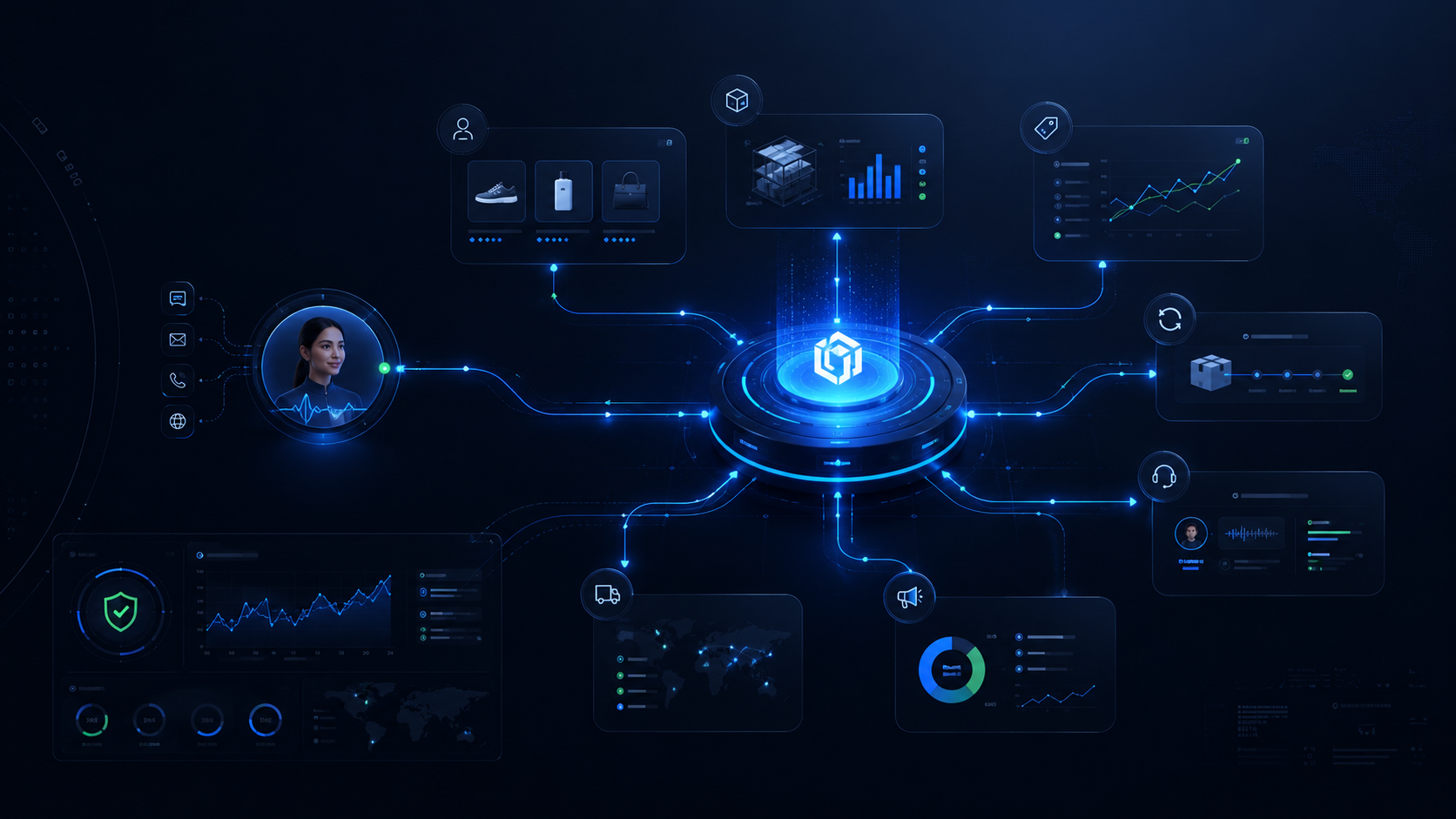
AI-native commerce will change both the front end and the operating core.
On the customer side, AI agents can become shopping advisors, fit assistants, product explainers, service representatives, loyalty guides, and post-purchase support. Customer experience becomes more conversational and personalized.
On the operational side, AI can assist with demand forecasting, assortment planning, inventory allocation, pricing, promotion, returns, fraud, product content, supplier coordination, and store operations.
The AI-native retailer becomes more adaptive.
It senses demand shifts earlier. It personalizes offers more precisely. It adjusts inventory faster. It resolves service issues more automatically. It generates product content at scale. It coordinates stores, warehouses, suppliers, and digital channels with less manual friction.
The disruption is especially strong where margins are thin and customer expectations are high.
Retailers that use AI only for marketing copy will miss the bigger opportunity.
The real advantage is a commerce operating model that learns continuously from customer behavior, inventory signals, service interactions, and supply chain constraints.
8. Manufacturing, Supply Chain, and Logistics
Manufacturing and logistics are primed for a different kind of AI-native disruption: the fusion of digital intelligence with physical operations.
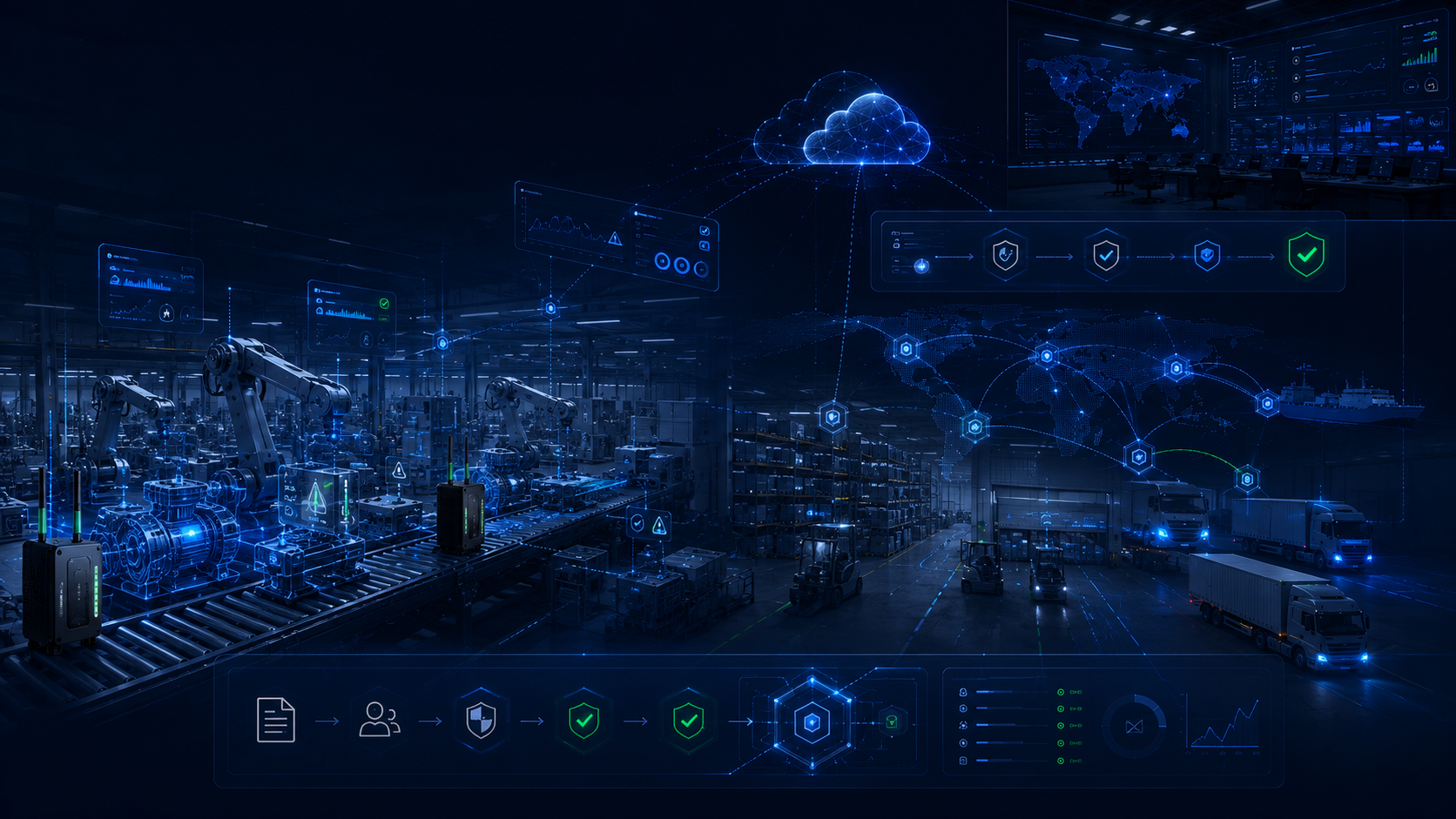
These industries are already data-rich but operationally complex. They involve machines, sensors, schedules, inventory, quality control, maintenance, suppliers, transportation, warehouses, labor planning, and customer commitments.
AI-native manufacturing and logistics can improve:
- Predictive maintenance
- Quality inspection
- Production scheduling
- Demand sensing
- Inventory optimization
- Supplier risk monitoring
- Route planning
- Warehouse coordination
- Field service
- Safety monitoring
- Energy optimization
The key difference is latency and locality.
Some AI can run in the cloud. But many industrial workflows need edge inference, local context, and resilient operation. A factory cannot depend on distant intelligence for every real-time decision.
The AI-native industrial enterprise will use a hybrid architecture: edge reflexes for local operations, cloud intelligence for optimization and learning, and a control plane to govern agents, models, data, and actions.
The disruption is not only lower cost.
It is more adaptive operations: faster response to disruptions, less downtime, better quality, more resilient supply chains, and more intelligent use of labor and energy.
9. Media, Marketing, and Creative Production
Media and marketing were among the first industries visibly affected by generative AI.
Content generation, image creation, video editing, campaign drafting, personalization, localization, SEO, social media production, and audience analysis can all be accelerated.
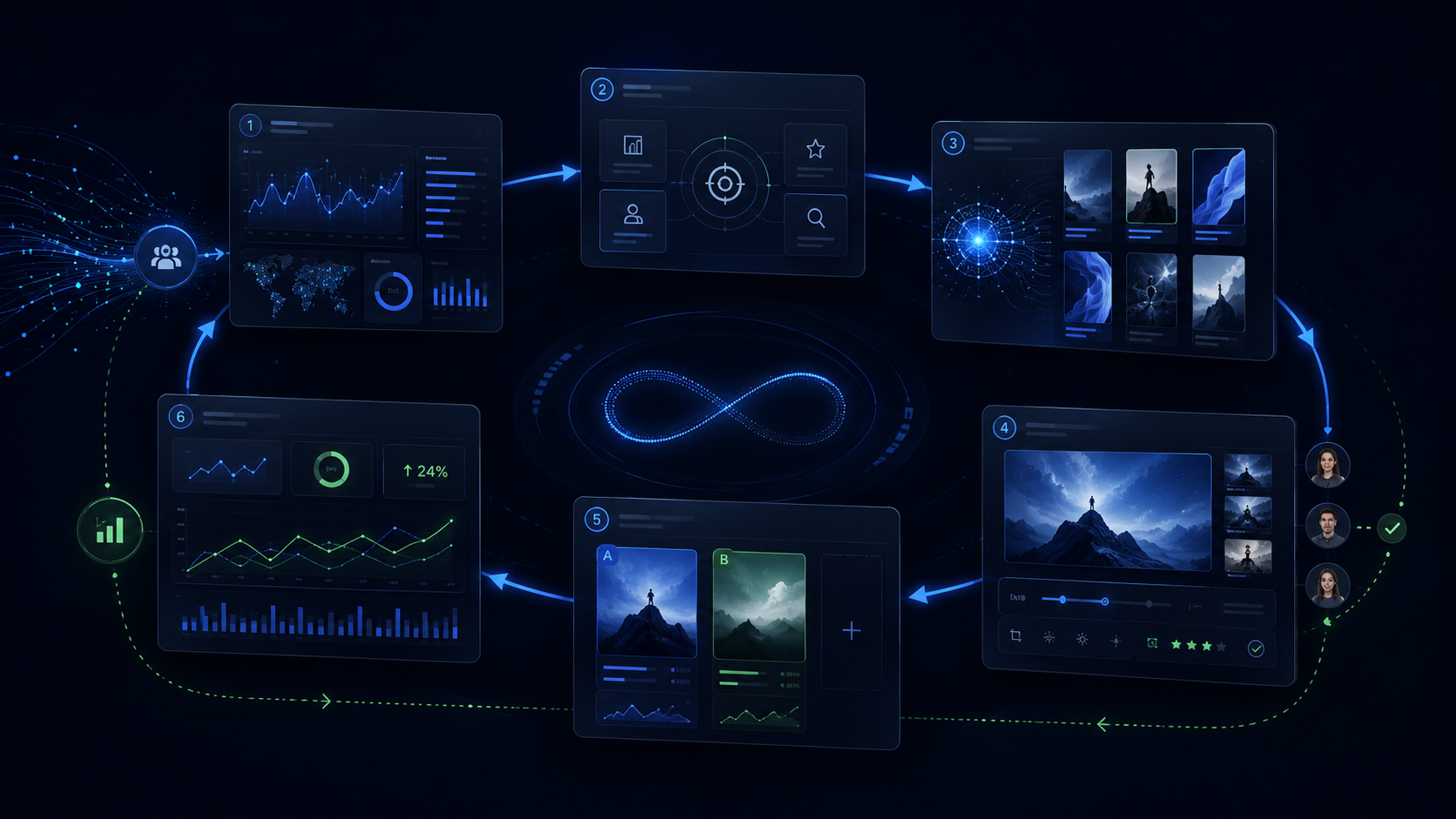
But the AI-native disruption is deeper than content volume.
Creative production becomes more iterative, personalized, and data-connected. Campaigns can be generated, tested, adapted, localized, and optimized faster. Small teams can produce at a scale that once required agencies. Brands can create more targeted content for segments, channels, and moments.
This changes the labor model.
The value shifts from production capacity to creative direction, taste, strategy, brand judgment, audience understanding, and governance.
It also changes competition. The cost of average content falls. The premium on distinctive voice, trust, originality, and distribution rises.
The risk is sameness.
If every brand uses similar models trained on similar patterns, content becomes more abundant but less differentiated. The winners will use AI to increase creative leverage without losing brand identity.
AI-native marketing is not “generate more posts.”
It is a learning system that connects audience signals, creative strategy, content production, experimentation, and performance feedback.
10. Government and Public Services
Government may not move as quickly as startups or commercial sectors, but it is highly exposed to AI-native transformation.

Public services involve enormous volumes of forms, applications, permits, benefits, casework, inspections, citizen inquiries, compliance reviews, policy analysis, and operational coordination.
Many government processes are slow because they are document-heavy, rule-heavy, and fragmented across agencies and legacy systems.
AI-native public services could improve:
- Benefit application support
- Permit processing
- Citizen service centers
- Caseworker assistance
- Fraud detection
- Emergency response coordination
- Public health communication
- Infrastructure maintenance
- Policy analysis
- Procurement and grants
- Regulatory review
The opportunity is better service at lower administrative burden.
But the risk is also high. Government AI must be accountable, explainable, appealable, accessible, secure, and fair. Public institutions cannot hide consequential decisions inside opaque automation.
The most promising model is not fully automated government.
It is human-centered public service with AI support: faster intake, clearer guidance, better case summaries, earlier risk detection, and more responsive operations.
Government is primed not because it will adopt fastest, but because the pain points are so large and the public value could be significant.
The Common Pattern: AI-Native Operating Loops
Across these industries, the pattern is the same.
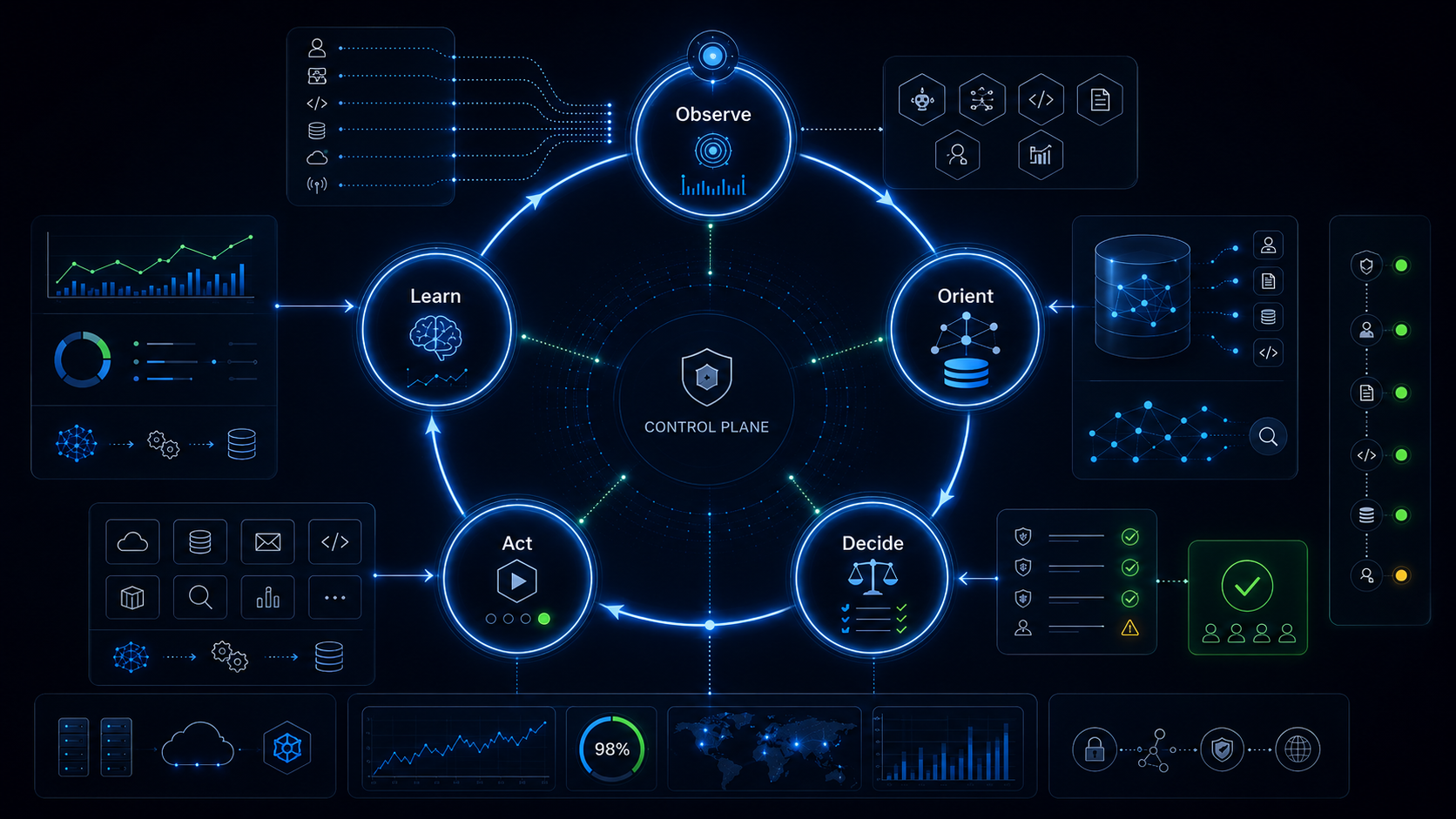
AI-native disruption happens when organizations rebuild operating loops.
Observe: capture signals from customers, systems, documents, devices, transactions, and workflows.
Orient: assemble context from memory, data, policies, history, and current conditions.
Decide: recommend, route, approve, prioritize, or automate based on context and constraints.
Act: update systems, trigger workflows, communicate, escalate, or execute tasks.
Learn: measure outcomes and improve the next loop.
Industries are primed for disruption when these loops are slow, expensive, fragmented, and repeated at scale.
That is why AI-native transformation is not about sprinkling generative AI across existing processes.
It is about redesigning the loops.
The Control Plane Will Decide the Winners
The more AI changes operating models, the more important governance becomes.
AI-native disruption creates new risk because models and agents begin to influence decisions and actions. They access data, call tools, update systems, interact with customers, support professionals, and coordinate workflows.
That requires a control plane.

The control plane provides:
- Agent identity
- Data permissions
- Model routing
- Runtime policy
- Tool authorization
- Human approval
- Observability
- Audit trails
- Quality evaluation
- Incident response
- Cost and latency management
Industries with high regulation, high stakes, or high customer trust requirements cannot scale AI without this layer.
The winners will not simply be the companies that deploy AI fastest.
They will be the companies that scale AI safely, visibly, and repeatedly.
The Strategic Takeaway
The industries most primed for AI-native disruption are not defined only by technology readiness.
They are defined by operating-model pressure.
Where work is knowledge-heavy, fragmented, expensive, repetitive, measurable, and under pressure, AI-native transformation can move quickly.
That includes customer operations, software, financial services, healthcare administration, professional services, education, retail, manufacturing, media, and government.
But the deeper point is this:
AI-native disruption is not an industry story alone.
It is an operating model story.
Any industry built on slow coordination, manual interpretation, expensive expertise, and fragmented workflows is vulnerable.
Any company that can turn intelligence into governed action will gain leverage.
The next competitive advantage will not come from having AI tools.
It will come from becoming an AI-native enterprise before the rest of the industry understands what changed.
Sources and Further Reading
- McKinsey, “The economic potential of generative AI: The next productivity frontier” — https://www.mckinsey.com/capabilities/tech-and-ai/our-insights/the-economic-potential-of-generative-ai-the-next-productivity-frontier
- McKinsey, “The state of AI in 2025: Agents, innovation, and transformation” — https://www.mckinsey.com/capabilities/quantumblack/our-insights/the-state-of-ai
- Stanford HAI, “2026 AI Index Report” — https://hai.stanford.edu/ai-index/2026-ai-index-report
- Deloitte, “The State of AI in the Enterprise — 2026 AI report” — https://www.deloitte.com/us/en/what-we-do/capabilities/applied-artificial-intelligence/content/state-of-ai-in-the-enterprise.html
- Microsoft WorkLab, “2026 Work Trend Index: Agents, human agency, and the opportunity for every organization” — https://www.microsoft.com/en-us/worklab/work-trend-index/agents-human-agency-and-the-opportunity-for-every-organization
- Microsoft, “2025 Annual Work Trend Index: The Frontier Firm is born” — https://blogs.microsoft.com/blog/2025/04/23/the-2025-annual-work-trend-index-the-frontier-firm-is-born/