Enterprise AI Security
Security frameworks for agentic AI, AI governance, incident response, identity, access, audit, and enterprise risk management.

Enterprise AI security is becoming an operating problem.
The risk is no longer only whether a model gives a bad answer. The risk is what happens when AI systems are connected to business data, tools, workflows, approvals, and decisions.
The new security questions
- What agents exist in the enterprise?
- Who owns each agent?
- What data can each agent access?
- What tools can each agent use?
- What actions can each agent take?
- What gets logged?
- What requires approval?
- What happens when an agent is wrong?
- How do we investigate an AI incident?
Core security domains
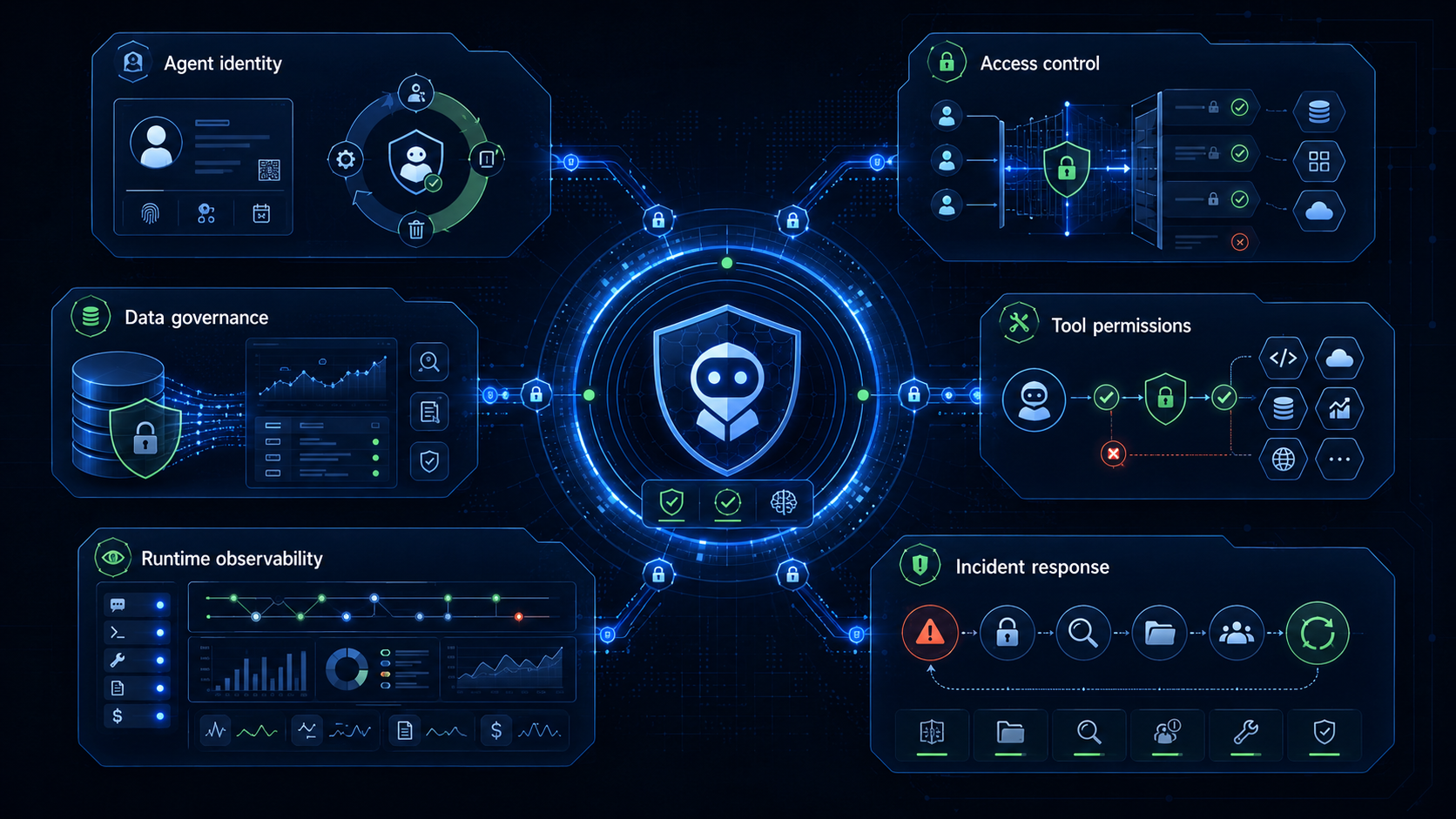
1. Agent identity
Every agent needs an identity, owner, purpose, and lifecycle.
2. Access control
Agents should operate with least privilege and clear scope.
3. Data governance
Sensitive data access must be controlled, monitored, and auditable.
4. Tool permissions
Tool access should be approved by purpose, risk, reversibility, and business impact.
5. Runtime observability
Security teams need visibility into agent actions, prompts, context, tool calls, outputs, exceptions, and costs.
6. Incident response
AI incidents need playbooks: stop the agent, preserve evidence, investigate cause, notify owners, remediate, and improve controls.
The practical standard
If an AI system can affect business outcomes, it belongs inside the security operating model.
Subscribe
Subscribe to Control Plane Insider for practical guidance on securing and governing the agentic enterprise.