AI-Native Operating Model
How leadership, collaboration, shared context, digital workers, and human accountability change when organizations become AI-native.

AI transformation is not only a technology shift.
It is an operating-model shift.
Most organizations will not fail at AI because they picked the wrong model. They will fail because they tried to bolt AI onto workflows, meetings, approval chains, and knowledge systems built for a different era.
The core idea
AI-native organizations do not ask only:
How can AI help us do this task faster?
They ask:
If intelligence were available from the beginning, how would we design the workflow differently?
That question changes everything.
What changes
1. Context becomes shared infrastructure
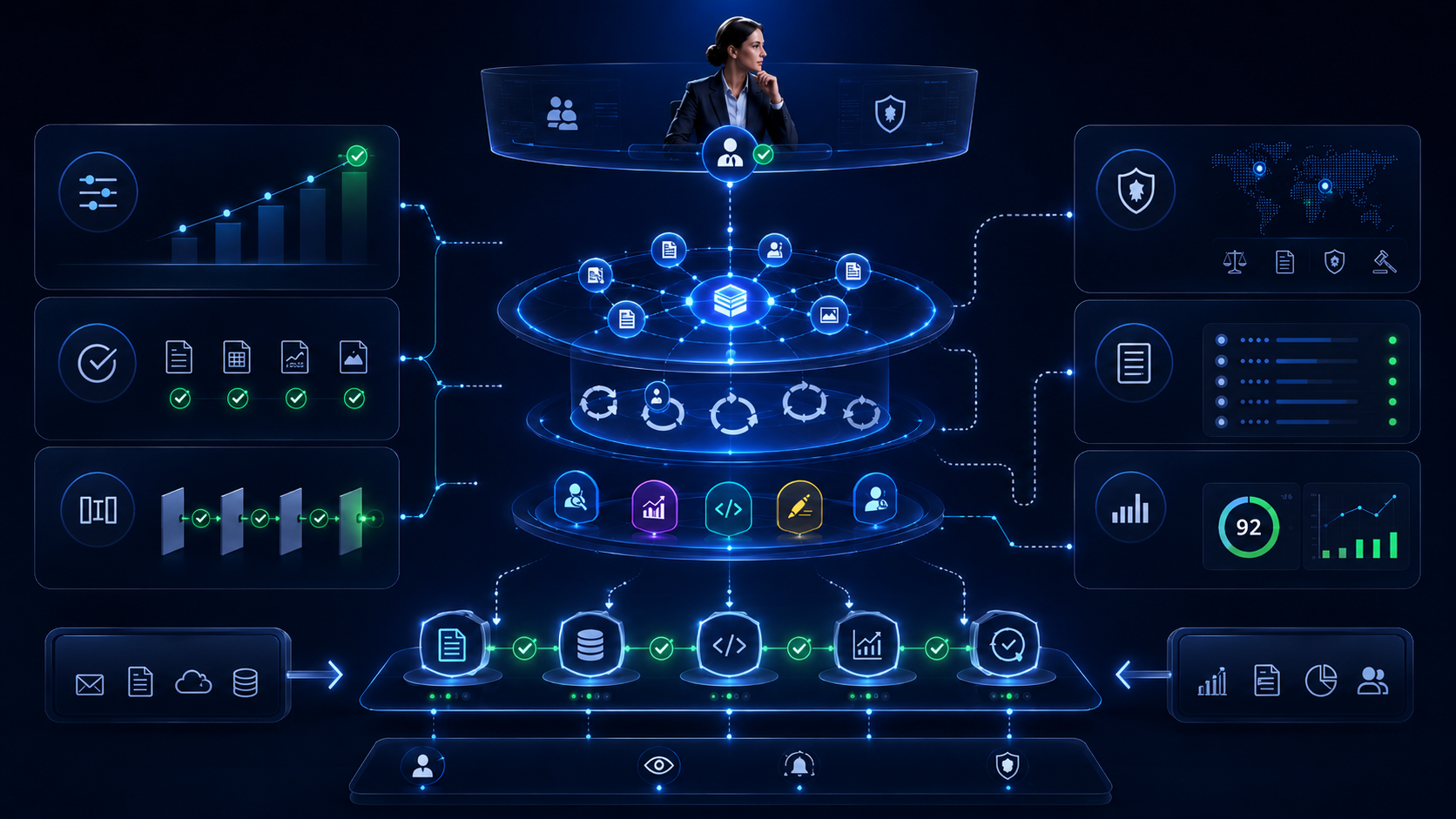
Teams need shared goals, facts, decisions, constraints, evidence, and operating rules. Without shared context, agents produce disconnected outputs.
2. Humans move up the stack
People spend less time assembling first drafts and more time setting direction, making judgments, defining standards, and approving consequential actions.
3. Agents become workflow participants
Agents can research, draft, summarize, test, monitor, route, reconcile, and prepare work. But humans remain accountable for outcomes.
4. Leadership becomes system design
Leaders define the context layer, standards, approval gates, evidence requirements, and autonomy boundaries.
5. Imagination becomes the constraint
When teams can orchestrate agents from shared context, the limiting factor becomes what leaders can imagine, design, and govern.
The operating model
An AI-native operating model needs:
- shared context;
- reusable workflows;
- agent roles;
- clear autonomy levels;
- evidence standards;
- approval gates;
- governance and audit;
- quality measurement;
- human accountability.
Subscribe
Subscribe to Control Plane Insider for practical executive thinking on AI-native work, agent orchestration, and the control systems required to scale responsibly.